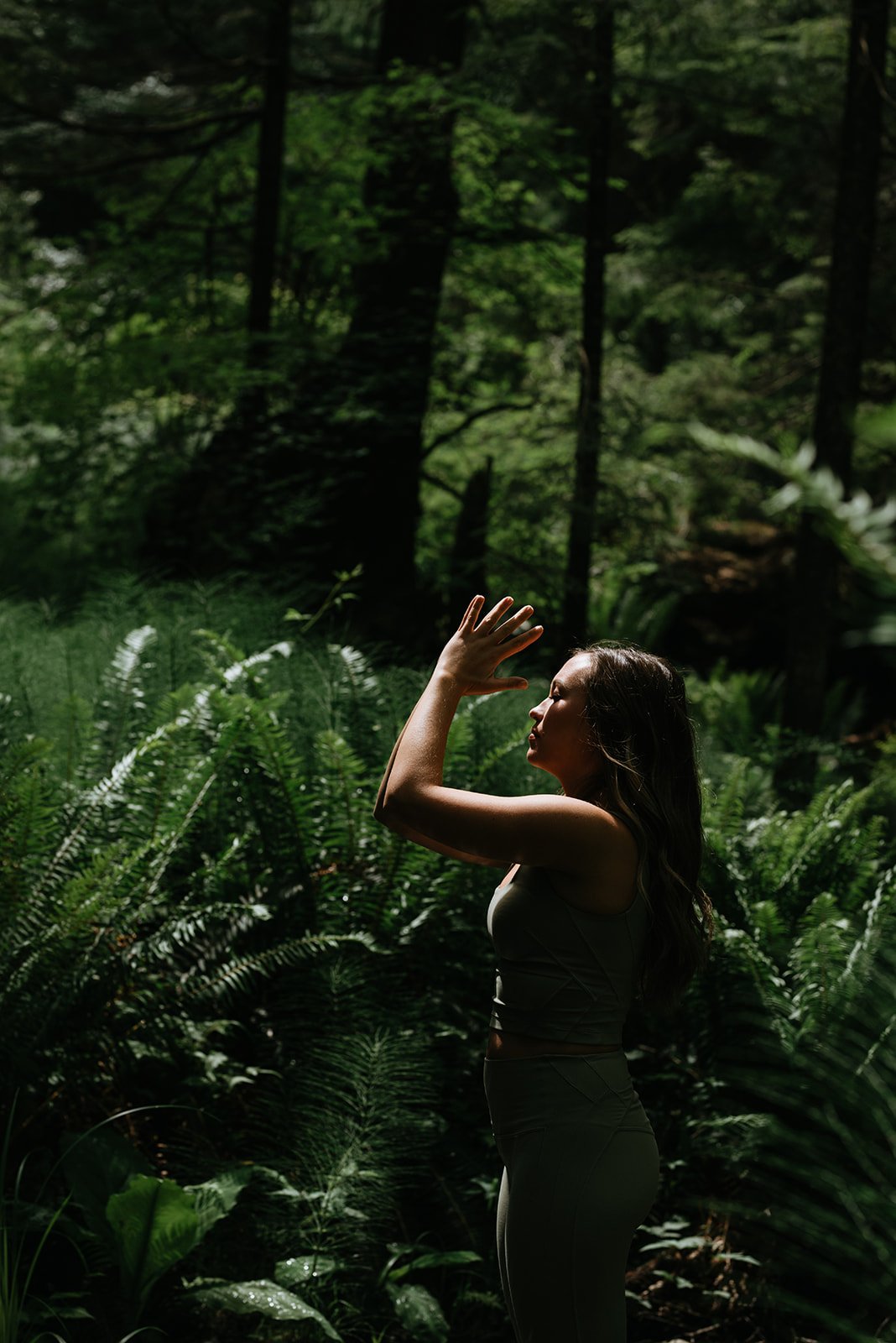
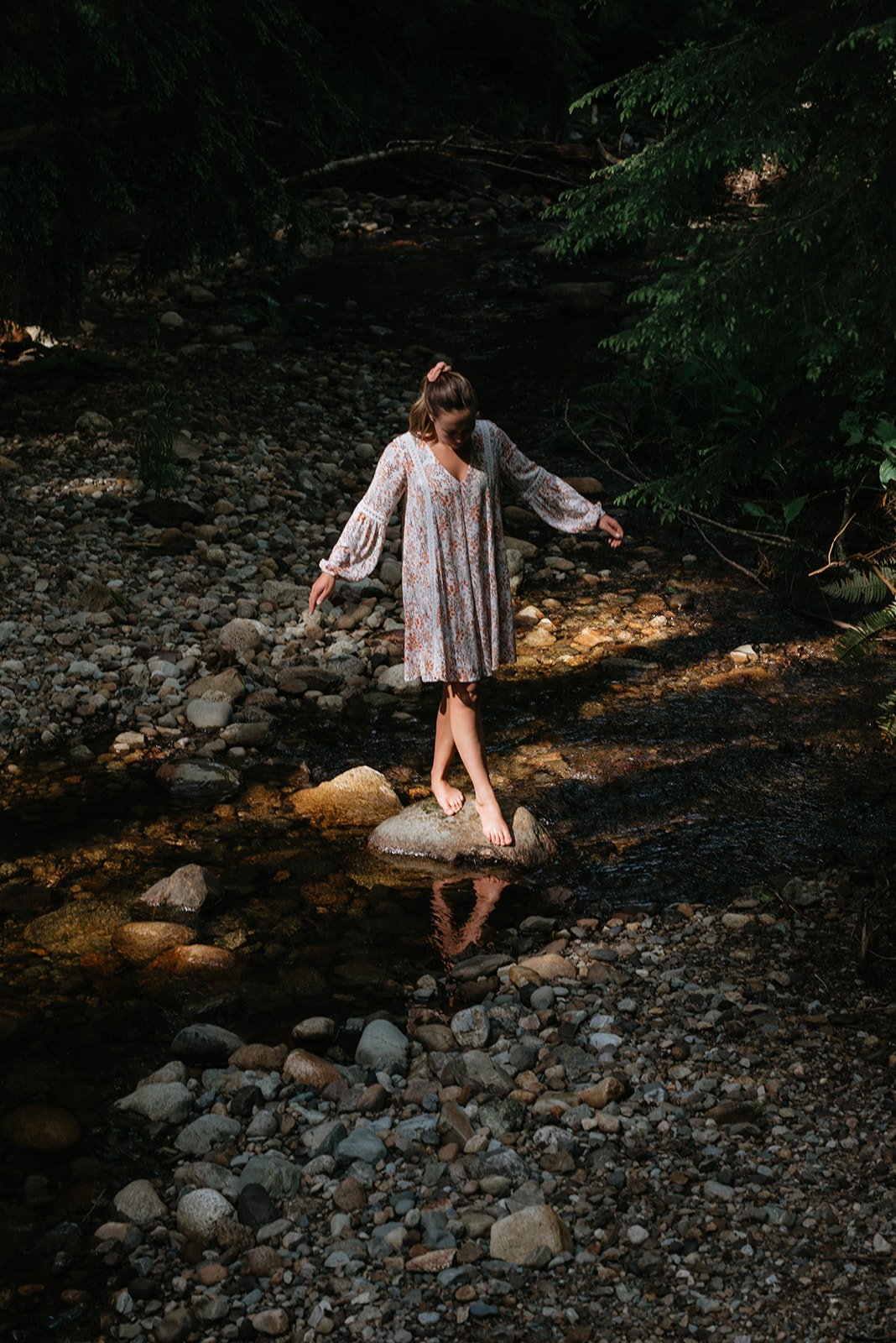
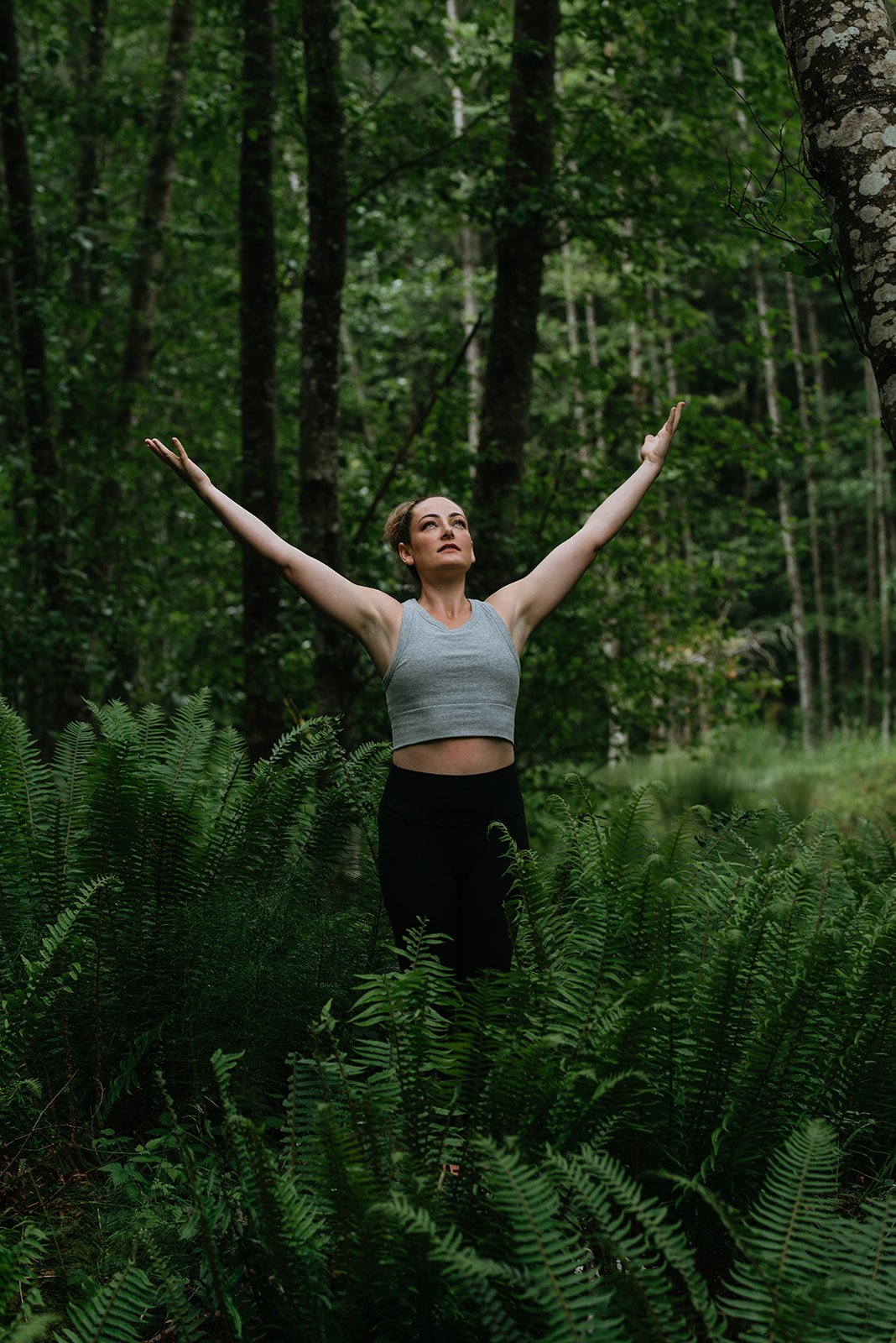
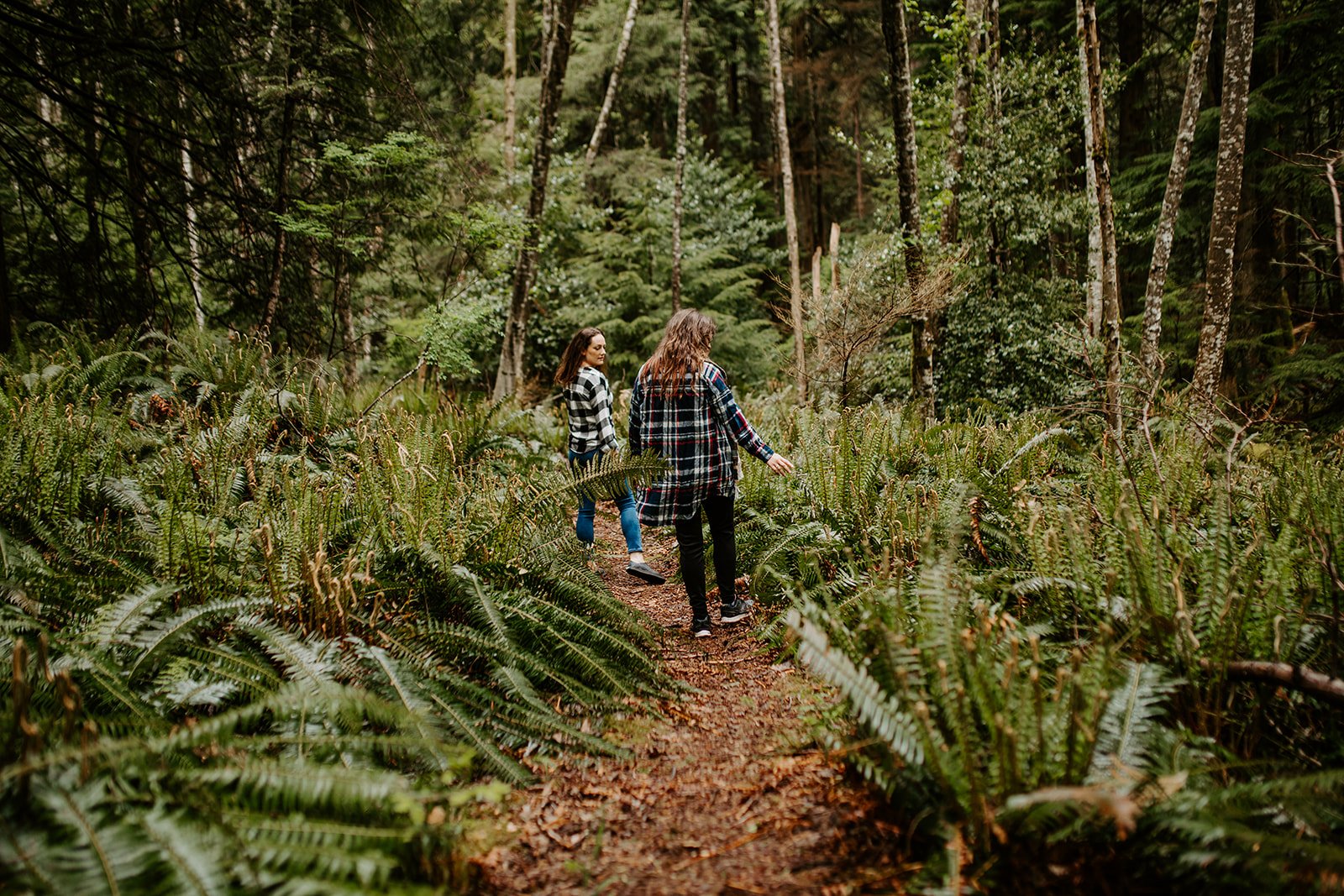
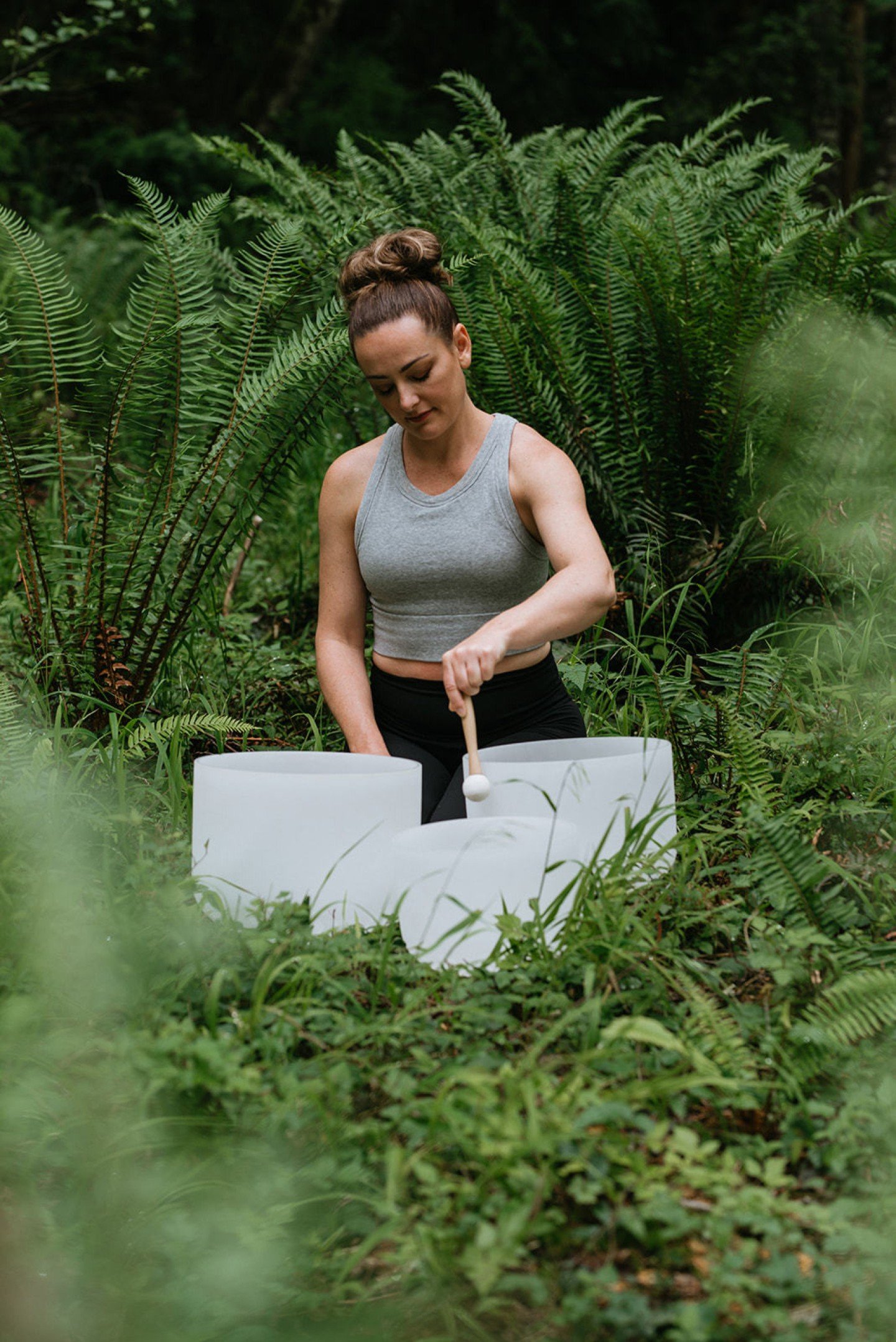
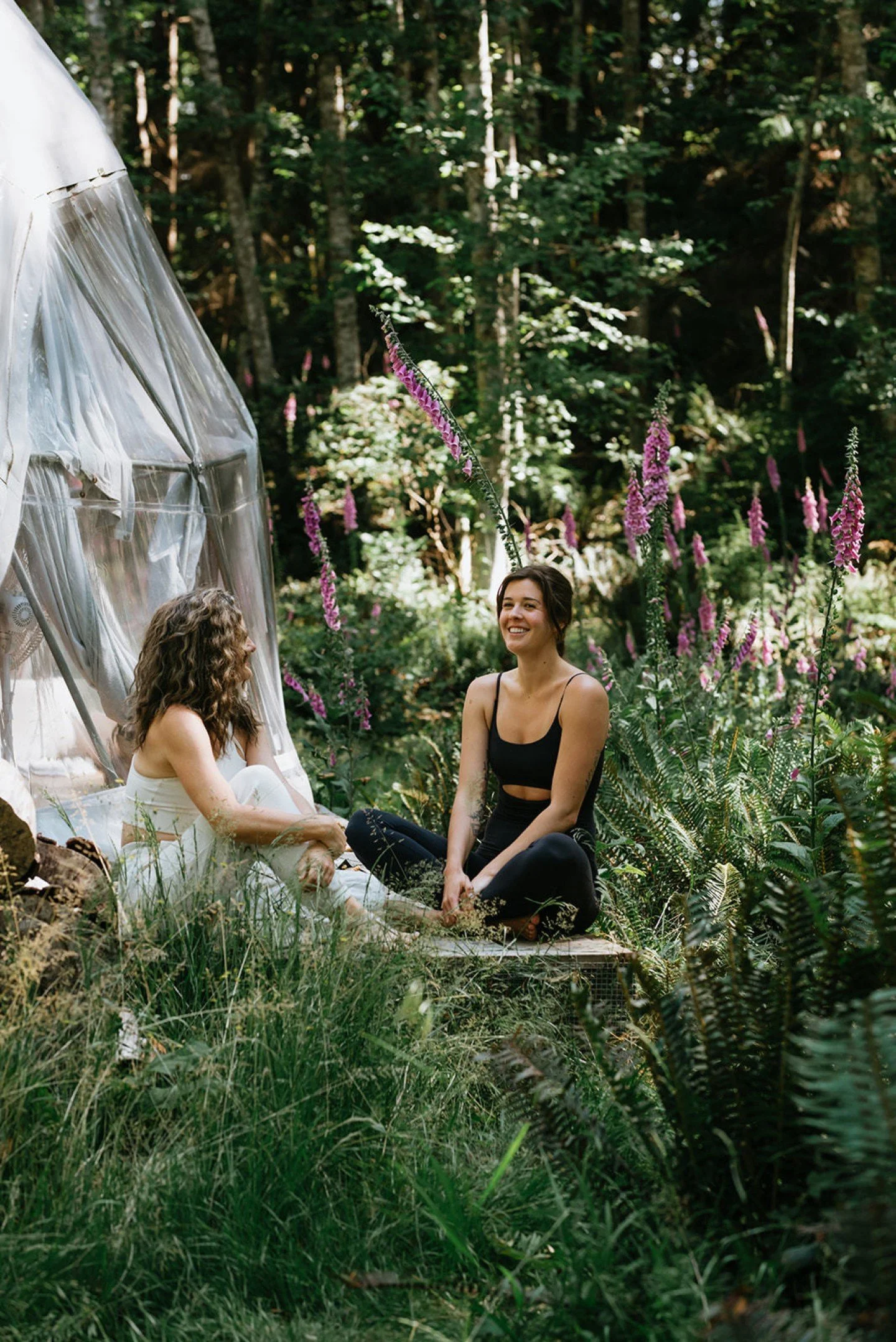
As we surrender ourselves to the observance of Santosha, we discover that contentment is not a destination to be reached, much like how Saucha is also not an arrival point, but a way of being—a way of embracing the fullness of life with hearts wide open. This practice may not make us immune to undesirable situations in our lives, but it can sweeten our perspectives, inner stories, and how we respond to the insatiable demands of our need for gratification. May contentment be part of what anchors us to ourselves, to each other, and to the divine presence that dwells within us and among us. In many ways, this is both a personal and community practice, something that can be cultivated at home, and also further amplified (or activated) at a nature retreat here at Nectar Yoga on Bowen Island, BC. There is something profoundly powerful when you are witnessed by others, and when you witness others cultivate Santosha with intention.
Moss on Bowen Island: Types, Ecological Roles, Spiritual and Indigenous Uses
Mosses’ diminutive size belies their resilience, tenacity, and ecological significance. Mosses are essential for retaining soil and moisture (as much as 40 times their weight), preventing erosion, and providing homes, insulation, and sustenance for various organisms in their ecosystems, including at Nectar Yoga Retreat on Bowen Island.
April is Aries & Taurus Season
April: From Fire to Earth
Aries is a Fire sign, and Fire is interested in movement and visibility. The head and the brain are its domain in the body, which is why the weeks of Aries season often bring a particular kind of alertness, a feeling of the mind running slightly ahead of everything else. Over the winter months, attention settled inward and downward, toward the feet and the slower rhythms that Pisces governs. March pulled it back upward again, toward the face and eyes and the part of the head where decisions live.
Taurus rules the neck, the jaw, and the throat, which is the corridor connecting all of that head-forward Aries energy back down into the rest of the body. When the sun moves into Taurus, something in the physical body responds to that shift, often first in the jaw, which many people hold without realizing it. The masseter muscle, running along the side of the jaw, is one of the strongest muscles in the body relative to its size, and it tends to absorb whatever has not yet found its way into words.
Ancient Beauties: Ferns and Where to Find Them On Bowen
Ferns, among the oldest plant species on Earth, are nature’s quiet survivors. With origins dating back more than 360 million years, they’ve thrived through major environmental shifts, even outlasting dinosaurs. Today, these graceful plants can be found in forests, gardens, and homes, offering both beauty and environmental benefits.
Ferns are part of a group of plants known as Pteridophytes, which include over 10,000 species. Unlike flowering plants, ferns reproduce through spores and do not produce seeds or flowers. These ancient plants played a significant role in shaping our planet’s ecosystems, and according to the Australian National University, some modern-day coal deposits are believed to be remnants of ancient fern forests.
The fern’s resilience lies in their adaptability. Species like the Bracken Fern and the Staghorn Fern can survive in harsh conditions, including poor soil and limited sunlight, making them a symbol of endurance and perseverance.
Nectar Yoga Explores Isvara Pranidhana: Surrendering to the Sacred
At its core, Isvara Pranidhana calls upon us to release our grip on the illusion of control. The practice urges us to let go of the ceaseless pursuit of ego-driven ambitions and the false belief in our hyper-individuality-based abilities. Here at Nectar Yoga Retreat, sitting with humility as a teacher is a lifelong journey.
Forest Bathing | The Benefits + How To Practice
There’s a reason why the largest cities in the world have parks, trees, + pockets of nature woven throughout their busy streets. Studies have found that spending 10 to 20 minutes a day outdoors can lead to an increase in overall well-being and happiness — and decreased amounts of stress; meaning these bits of nature added to urban life are lending a positive impact on a people’s day to day life.
Aside from spending time in city parks, the more in-depth practice of forest bathing has been proven to have physical + mental health benefits across the board.
The term ‘Forest Bathing’ references a physiological + psychological practice that emerged in Japan in the 1980s. This practice, also known as ‘Shinrin-yoku’, was cultivated to help people achieve two goals; to relieve feelings of burnout while also inspiring residents to connect with, and protect the country’s green spaces. Forest Bathing is an open-ended practice in the sense that there is no right or wrong way to experience it. It can be as simple as standing in nature and noticing the smells, sounds + sights the area provides you.
The Benefits Of Forest Bathing Include:
lower blood pressure
reduced levels of cortisol (stress hormones)
strengthens immunity
relieves anxiety
improves concentration
improves short-term memory
energizes the body + mind
improves mood
strengthens sleep patterns
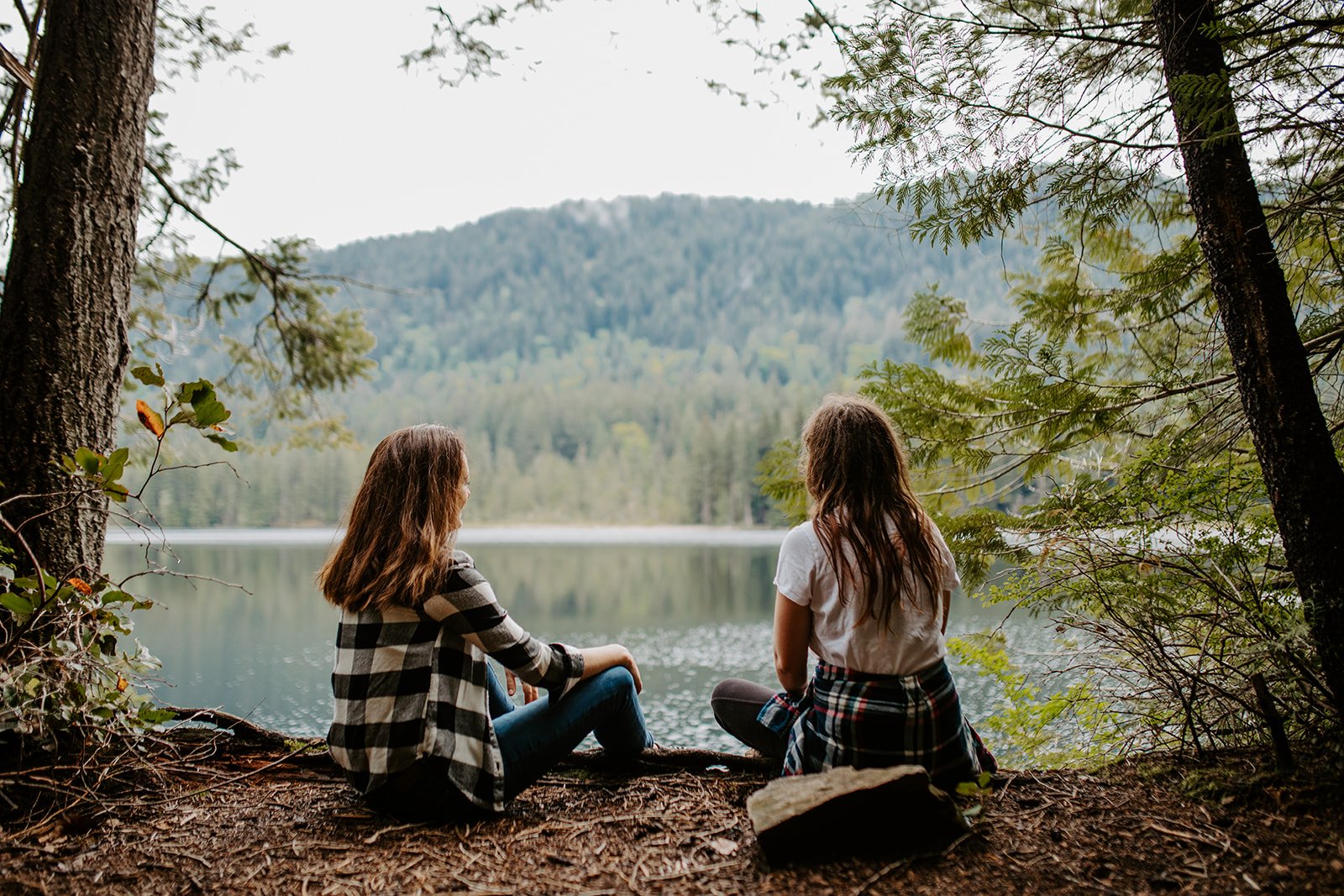
While the word “forest” is in the name of this practice, heading to a rural wooded area is not required. You can take a trip to a nearby park, your favorite local trail, the beach, or any natural setting close by. The focus is to move through this practice with intention and mindfulness; meaning being present and fully in the moment. If you can, turn off or silence your phone or other devices that may distract or interrupt your time.
Once you’ve arrived at your chosen spot, take some deep breaths and ground yourself. Let yourself notice all that your senses are taking in — whether it’s the scent of towering trees or the sounds of chirping birds.
Allow yourself to spend a few moments observing your surroundings. You might choose to do this practice in stillness, movement or a combination of both. Sit and watch how the trees sway in the wind or simply walk around. If you decide to walk, go at a leisurely pace and without a specific destination in mind. It is important to let your mind and senses explore + indulge.
Safety tip: Always pay attention to your surroundings, stay on marked trails, + wear appropriate clothing/footwear. Consider things like sun protection or any possible allergies you may have; be respectful of nature around you, and leave no trace other than footprints. When possible, bring a friend or let someone know where you’re going and for how long.
A good rule of thumb is to practice forest bathing for at least 20 minutes every day. If you don’t have that much time to spare, that’s absolutely fine. You can start with a shorter amount of time. The goal of forest bathing is to relax + detach — this practice shouldn’t feel like a chore. The aim is for this to be something you look forward to and enjoy.
No matter how much time you spend outdoors, remember to look for moments that bring you to awe. You can also tie your forest bathing practice to your journaling practice (we have a whole blog post about different journal practices for you HERE).
After each session of forest bathing, use your journal to note your experience or any thoughts you had while immersed in nature. This is a good way to keep track of how the practice is making you feel over time — and help you create an additional ritual that supports your overall heath.
Gratitude to our community near and far, both for taking the time to explore our blog and for walking the path to your best self - we hope this resonated and aids you in finding balance within.
Thanks and credit goes to the resources for this blog provided by the writers and healthcare professionals at Kaiser Permanente
Let us know in the comments where you like to spend time forest bathing or how you feel about it.
All Photos - Nectar Yoga Copyright