A Year with Astrology and Parts of Our Bodies with Chest-Opening Yoga and Diaphragmatic Breathing Exercises
New Moon: June 15, 2026 | Summer Solstice: June 21, 2026 | Full Moon: June 30, 2026
June moves through two signs and crosses the longest day of the year. Gemini holds through the first three weeks, the pace still quick, the mind still reaching relationally outwards. Then Cancer arrives on June 21, the same day as the summer solstice, and the quality of the month shifts from an outward quickness to an inward receptivity. The chest, which has been open and forward-facing through Gemini's shoulder work, now becomes the centre of attention.
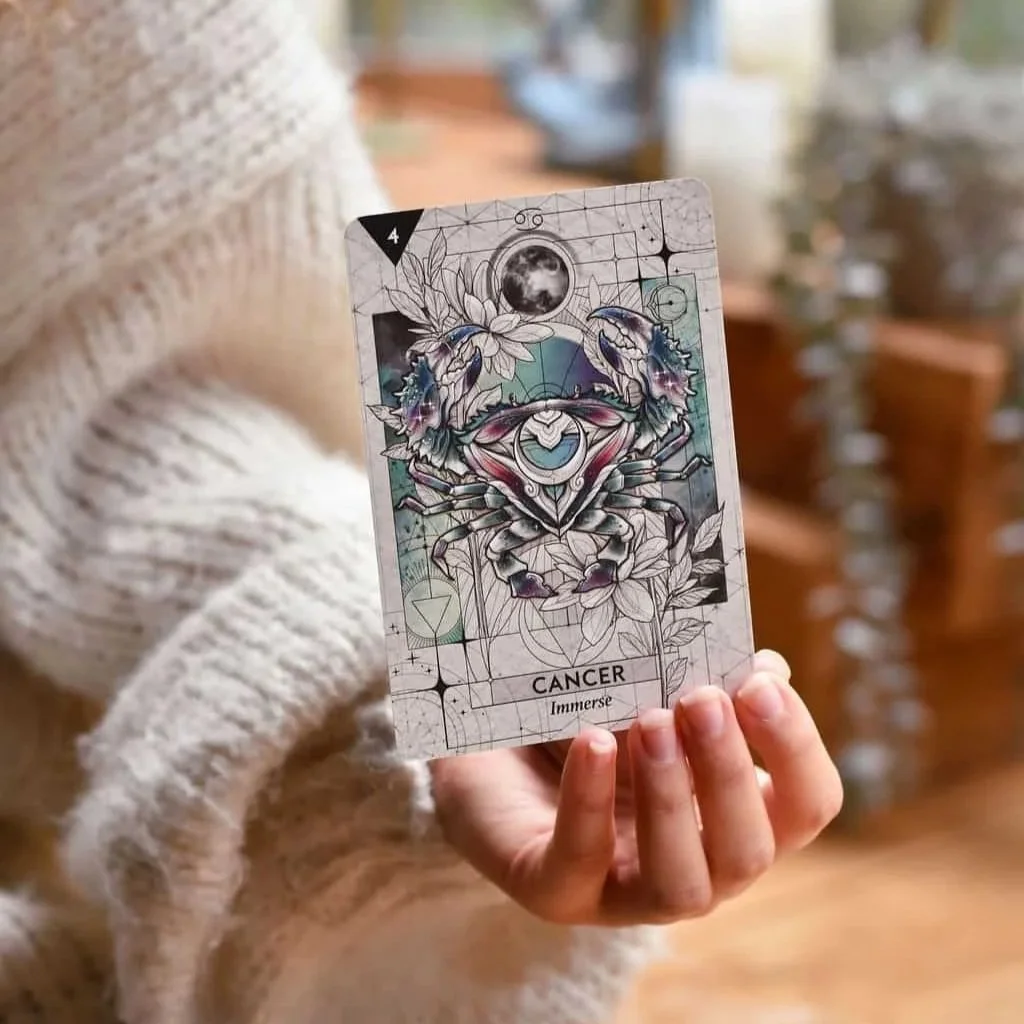
Cancer governs the chest, the breasts, and the stomach. More broadly, it governs safety, home, and what we hold close. The shift from Air to Water on the solstice is one of the more palpable seasonal transitions in the astrological calendar, and even those who do not follow astrology often notice it. The urge to slow down and to protect what matters most by retreating into the Cancerian crab are often appropriate responses to the peak of summer's luminosity.
The new moon on June 15 falls in Gemini, six days before the solstice. It is a compressed moment to plant something in the last days of Air season before Water takes over. The full moon on June 30 falls in Cancer's opposite sign, Capricorn, asking what structure you want to build around what the Cancer weeks have brought to the surface.
The summer solstice on June 21 is both an astrological and a seasonally meaningful date. A separate post on the summer solstice at Nectar goes deeper into what this date means and how to mark it intentionally.
June: From Air to Water
Gemini's domain is the shoulders, arms, hands, and lungs. May introduced that territory and the practices that open it. June begins there and moves down into the chest, the ribs, and the breath's deeper capacity. Three-Part Breath, which this month introduces, reaches further into the body than box breathing does, expanding the lower belly, the ribcage, and the upper chest in sequence. It is the breath of Cancer's water element: receptive, layered, touching the baseline of the self.
In the Western astrological tradition, Cancer is ruled by the Moon, which governs cycles, tides, and the rhythms of the body that are not entirely under conscious control. The practices this month work with that quality. Where May's practices asked for steadiness and physical form, June's ask for surrender to sensation. The chest opens not because you push it open but because the breath makes room.
The transition from Air to Water is also a transition in how emotion moves through the body, as the element of Air disperses while Water holds. Cancer season is one of the more emotionally porous times of the year for many people, and the chest and heart space are where that porousness tends to express physically. A yin yoga session that works the chest and upper back is not only a mobility practice in June, it is also a nervous regulation practice.
June's Zodiac Focus and Body Placement
• Gemini (Air): Shoulders, arms, hands, lungs, nervous system, breath (through June 20)
• Cancer (Water): Chest, breasts, stomach, ribs, lower lungs, lymphatic system (from June 21)
Practices for June: Chest-Opening Yoga, Mid and Upper Back Exercises, and Breath
Fish Pose (Matsyasana): Chest Stretches and Yin Yoga for the Heart Space
Purpose: A chest-opening backbend and yin yoga pose that works directly into Cancer's body zone. Fish Pose creates traction through the anterior chest and throat and stretches the intercostal muscles between the ribs. In its supported version, it allows the heart space to open subtly over time, making it one of the most accessible chest stretches available in a home practice. It is also understood within the yoga tradition to stimulate the thymus gland, located in the upper chest, which plays a role in immune function. As a gentle mid and upper back exercise, it works against the forward collapse that accumulates through screen use and desk posture. For those exploring yoga for digestion, Fish Pose also compresses and then releases the abdominal region, which can support digestive movement.

How-to:
Lie on your back with your legs extended or crossed at the ankles, whichever is more comfortable.
Place your hands, palms down, under your hips or alongside your body.
Press into your forearms and lift the chest toward the ceiling, allowing the head to drop back gently. The crown of the head may rest lightly on the floor, but the weight should be in the forearms, not the neck.
For a supported version, place a folded blanket or bolster under the thoracic spine before lying back, and allow the arms to rest open at the sides. This version is suitable for a longer hold of 3 to 5 minutes.
To come out, carefully tuck the chin gently, press into the forearms, and lower the back down slowly.
Focus: Fish Pose asks for a different quality of chest opening than the shoulder openers of May. Where Gomukhasana Arms worked through effort and hold, Matsyasana works through time and release. Let the breath fill the chest from the inside by softening the intercostals rather than pulling the chest open from the outside.
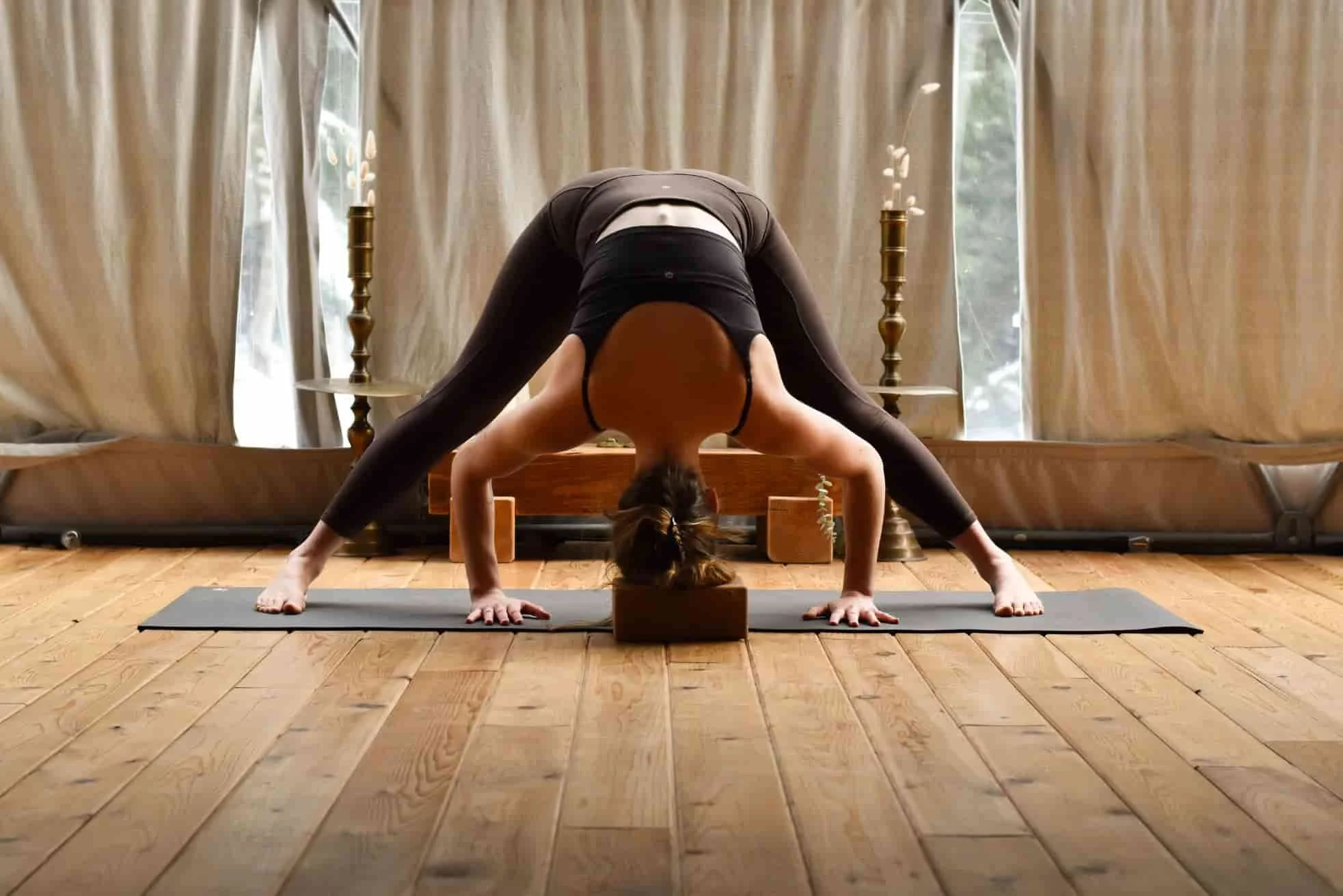
Standing Wide-Leg Forward Fold (Prasarita Padottanasana): Full Body Mobility Routine with Shoulder Opening
Purpose: A standing forward fold that serves as both a full body mobility routine element and a shoulder-opening practice, making it a bridge between Gemini's shoulder territory and Cancer's chest and heart space. Clasping the hands behind the back and allowing the arms to fall overhead as you fold inverts the shoulder girdle and opens the front of the chest, while the fold itself decompresses the spine. A meta-analysis of randomised controlled trials found that yoga asanas, including standing poses and gentle inversions, are associated with reduced cortisol and improved heart rate variability, supporting their use as yoga for stress relief.
How-to:
Stand with the feet wide, roughly three to four feet apart, toes pointing forward or slightly turned in.
Clasp the hands behind the back, interlacing the fingers. If the hands do not reach each other, hold a strap or folded belt between them.
On an inhale, draw the shoulder blades together and lift the chest.
On an exhale, hinge from the hips and fold forward, allowing the arms to fall away from the back and toward the floor. The head hangs freely.
Hold for 6 to 10 breaths, letting gravity do the work on the shoulders. Avoid forcing the arms further than they want to go.
To come out, release the hands, place them on the hips, and rise slowly on an inhale.
Focus: This is an office stretch and a desk stretch that works far beyond the desk. The inversion calms the nervous system, the shoulder opening counters the internal rotation of prolonged computer work, and the forward fold gives the lower back a moment of traction. Notice whether the shoulders drop further on the second or third breath.
Heart-Pulsing Cat/Cow (Bitilasana Marjaryasana): Exercises for Upper Middle Back Mobility
Purpose: A dynamic mobilization of the thoracic spine that sits within the category of exercises for upper middle back and mid and upper back exercises while working directly with Cancer's heart space. Where standard Cat/Cow moves the whole spine, Heart-Pulsing Cat/Cow isolates the movement in the thoracic region, between the shoulder blades and the lower ribs, asking the heart centre to lead both the extension and the flexion. This makes it one of the more targeted mid and upper back exercises available within a home practice, and it connects the physical opening of the chest with the breath in a way that standard Cat/Cow does not.


How-to:
Come to hands and knees, wrists under shoulders, knees under hips, spine in a neutral position.
On an inhale, rather than lifting the whole spine into Cow, focus the movement in the mid and upper back: let the chest drop toward the floor and the shoulder blades draw together, creating a heart pulse forward and down.
On an exhale, rather than rounding the whole spine into Cat, focus the movement in the thoracic region: draw the space between the shoulder blades toward the ceiling, the chest hollowing slightly inward.
Keep the lower back as still as possible throughout. The movement lives between the base of the neck and the bottom of the ribcage.
Move slowly, one breath per movement, for 8 to 12 cycles. Pause at the top of the extension for a full breath on the rounds that feel most open.
Focus: The thoracic spine is one of the most restricted regions in bodies that spend long hours at desks or driving, and thoracic extension and rotation are among the mobility capacities that diminish most noticeably with age and inactivity. Heart-Pulsing Cat/Cow is gentle enough to practice daily and specific enough to produce a noticeable change in how the upper back feels within a few weeks of consistent practice.
Three-Part Breath (Dirga Pranayama): Diaphragmatic Breathing Exercises for Anxiety and Stress
Purpose: Three-Part Breath, also called Dirga Pranayama or complete yogic breathing, is one of the foundational diaphragmatic breathing exercises in the Hatha yoga tradition. It teaches the lungs to use their full capacity by filling in three stages from the base upward: the lower belly, the ribcage, and the upper chest. As a stomach breathing exercise and a deep breathing exercise for anxiety, it works differently from box breathing: where box breathing uses counted structure to regulate the nervous system from the top down, Three-Part Breath works from the inside of the body outward, restoring the natural pattern of breath that shallow, stress-driven breathing displaces. It is also one of the more accessible calming breathing exercises for people who find counted breath techniques overly effortful.
Research on diaphragmatic breathing exercises finds that slow, full breathing activates the parasympathetic nervous system and reduces cortisol. Within the yoga tradition, the belly and lower chest are understood as the regions where stress-driven breath restriction tends to accumulate first, and Three-Part Breath specifically addresses both.
How-to:
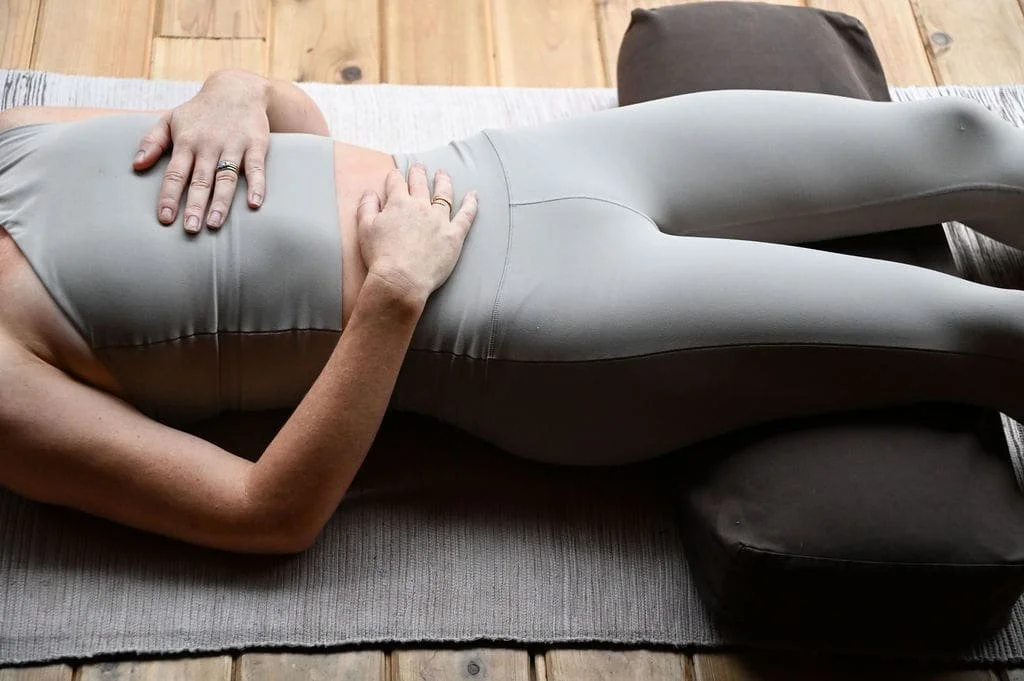
Lie on your back or sit with the spine tall. Place one hand on the lower belly and one hand on the upper chest.
Begin by exhaling completely.
On the inhale, feel the lower belly rise first, expanding beneath the lower hand.
Continue the inhale into the ribcage, feeling the ribs expand outward to the sides.
Complete the inhale in the upper chest, feeling the upper hand rise last.
Exhale in reverse: release the upper chest first, then the ribs, then the lower belly draws gently inward.
Repeat for 5 to 10 rounds, or until the three stages feel connected rather than segmented.
Focus: Most people find the lower belly stage the most difficult to access at first, because it is the part of the breath that stress and protective holding suppresses most consistently. If the belly does not rise, place both hands on the lower abdomen and let the weight of them become a target for the inhale. No need to force it, as the breath will find it with practice.
Full Moon, New Moon, and Reflection for the Month of June
Astrological Tarot Correspondences
May's Tarot introduced The Lovers, the card of choice and the awareness of competing goods. June brings The Chariot, which is the card that follows the moment of choosing.
Cancer corresponds with The Chariot in the Major Arcana. The Chariot is often depicted as a figure in a vehicle being pulled by two opposing forces, and the card's meaning has less to do with speed than with directed will. After The Lovers asks what you choose, The Chariot asks how you move with that choice without being pulled apart by the forces that still pull in different directions. It is a card of sovereignty rather than outer control, and Cancer's receptive, emotionally intelligent quality is what makes that embodied, inner authority possible.
Cancer season, for all its emotional safety, is not passive. The crab moves sideways, protected by a shell it carries with it. The Chariot moves forward, held together by will rather than walls. June asks what you are moving toward now that you have named what you value, and what inner resources you are drawing on to do it.
The Lovers (Gemini): Looking back at the choices May surfaced, which one did I actually make, and which am I still avoiding?
The Chariot (Cancer): What am I moving toward now that May's choices have been made? What internal steadiness is available to me that I have not yet called on?

Journalling for June
The new moon on June 15 falls in Gemini, the last lunation before the solstice shifts the season. It is a good moment to name what you want to take into Cancer season with you, and what you are ready to leave in the Air.
The full moon on June 30 falls in Capricorn, Cancer's opposite. Capricorn governs structure, discipline, and what endures over time. A Cancer full moon opposition in Capricorn asks where the emotional intelligence of the Cancer weeks can be given form, where what you have felt can become something built. When tensions and paradoxes to arise, and commit to sitting with them when they do.
Five minutes of Three-Part Breath before journalling shifts the body's physiological state in ways that change what surfaces on the page. The lower belly breath, the part that Cancer season asks you to access, is also where held emotion tends to live. Breathing into it first is not always comfortable, and it is often clarifying.
New Moon (June 15): What from Gemini season do I want to carry forward? What has been moving fast that I am ready to feel more slowly?
Solstice (June 21): At the peak of outward light, what inner resource feels most ready to tend? [See the solstice post for a longer reflection practice.]
Full Moon (June 30): What have the Cancer weeks shown me about what I need? Where does that need ask for structure rather than feeling alone?
June Events and Activities on Bowen Island
Cancer season asks for safety and nervous system regulation. Bowen Island in June offers that readily: the forest is fully canopied, the light is filtered through the canopy, and the temperature stays comfortable in the forest even on summer afternoons.
Join us for a 13-week creative unblocking journey, inspired by Julia Cameron’s The Artist’s Way, held in community every Sunday evening from June 21 to September 13. Drawing on one of the most enduring modern traditions in creative recovery, this program moves through creativity as a practice of returning to yourself. Andrea guides each session live on Zoom, 7:30–9:00 PM PST. No artistic background required.

Part of recovering the creative spirit is rest. Mist Thermal Sanctuary sits within the same valley of conifers as Nectar, and pairs well with the artistic series. Its private units include a wood-fired sauna, cold plunge, transition tub, outdoor eucalyptus shower, fire lounge, and tea bar of in-house herbal teas are set in the heart and real soundtrack of the temperate rainforest. Book your Mist Circuit.
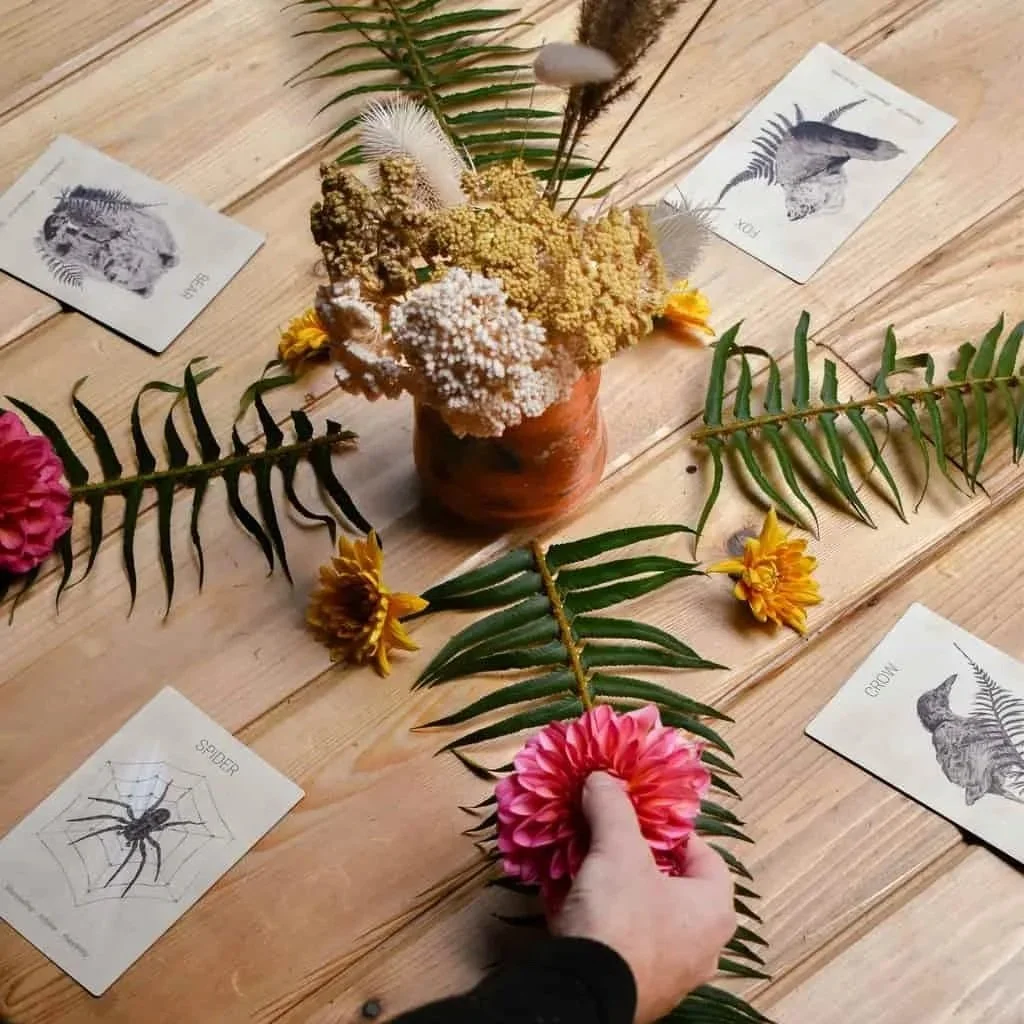
On June 21, the summer solstice and the entry of the sun into Cancer land on the same day. Nectar is marking the occasion with a community ceremony led by Andrea Clark, moving through Yin yoga, a sound bath with crystal bowls, and a guided gratitude circle. Full details are in the solstice post. Book the June 21 Summer Solstice ceremony.
About Nectar Yoga Retreat Centre
Nestled in the heart of a temperate forest, Nectar offers British Columbia vacation packages with 2-night stays on Bowen Island, nourishing vegetarian breakfasts, and daily guided yoga and meditation. We host mindfulness and meditation retreats, yoga retreats, sound healing, and other wellness practices with experienced instructors in holistic practice. Alongside our sister brand, Mist Thermal Sanctuary, we welcome guests from Vancouver and the lower mainland of BC, Victoria, Seattle, and beyond, to relax and renew the mind, body, and spirit.
References
https://www.sciencedirect.com/science/article/abs/pii/S0306453017300409
https://pmc.ncbi.nlm.nih.gov/articles/PMC6189422/
https://www.nature.com/articles/s41598-021-98736-9
https://pmc.ncbi.nlm.nih.gov/articles/PMC4959333/
https://pmc.ncbi.nlm.nih.gov/articles/PMC6122068/
https://link.springer.com/article/10.1007/s00484-019-01717-x
https://bonniegillespie.com/astrology-body-parts-ruled-by-signs
Disclaimer: The information in this post is not a substitute for medical guidance. If you are pregnant, in perimenopause, living with a health condition, or taking medication, please speak with your healthcare provider before beginning any of the practices described here.